

- Impressionism
- Realism
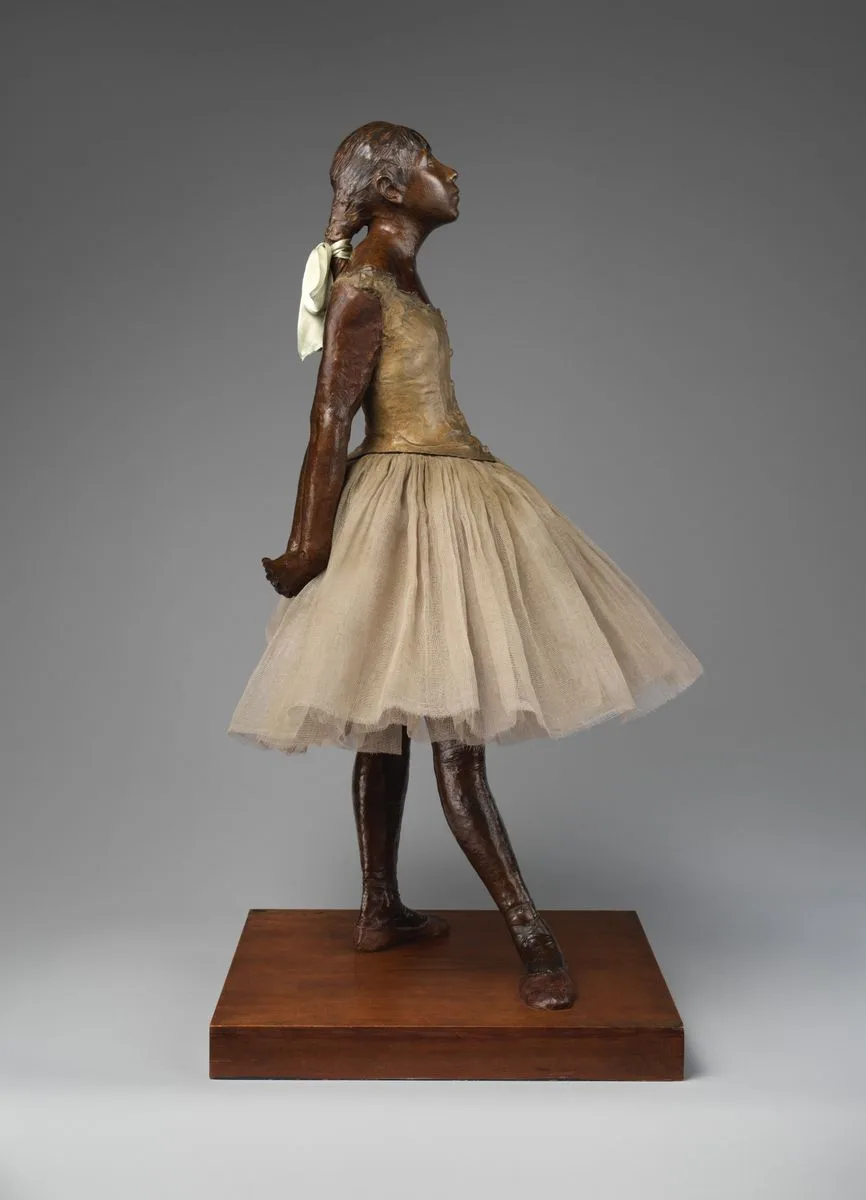
Let's be honest, the "Little Dancer of Fourteen Years" was the scandal of the 1881 Impressionist exhibition. When it debuted, critics clutched their pearls, calling the figure "hideously ugly" and "repulsive." Why the outrage? For starters, this was no idealized nymph carved from pristine marble. Instead, Degas presented a shockingly realistic wax figure of a young ballet student, complete with a real tutu, ballet slippers, and a wig of human hair. Using wax, a medium typically reserved for anatomical models, and dressing it like a doll was simply not done in "serious" art. The sculpture's subject, a young student from the Paris Opéra Ballet named Marie van Goethem, was instantly recognizable to the Parisian elite—not as a symbol of grace, but as one of the "little rats" from the opera's corps de ballet. These girls often came from impoverished backgrounds, and their world was one of grueling work and the constant attention of wealthy male patrons. Degas’s unvarnished portrayal captured this grim reality. Her pose isn't one of elegant performance but of exhaustion and a hint of defiance, with her chin up and hands clasped behind her back. This wasn't just a portrait; it was a social commentary. The public saw a working-class girl, not an ethereal fairy, and they were uncomfortable. The sculpture’s raw realism exposed the less glamorous side of ballet, a world of "gaslight and struggle." Degas's creation was so controversial that he never publicly exhibited another sculpture in his lifetime. The original wax figure was just the beginning; after his death, a series of bronze casts were made, securing the dancer's complicated legacy.
How did ArtBot do? Should we ask him to regenerate the information?
The information is correct?