

- Neoclassicism
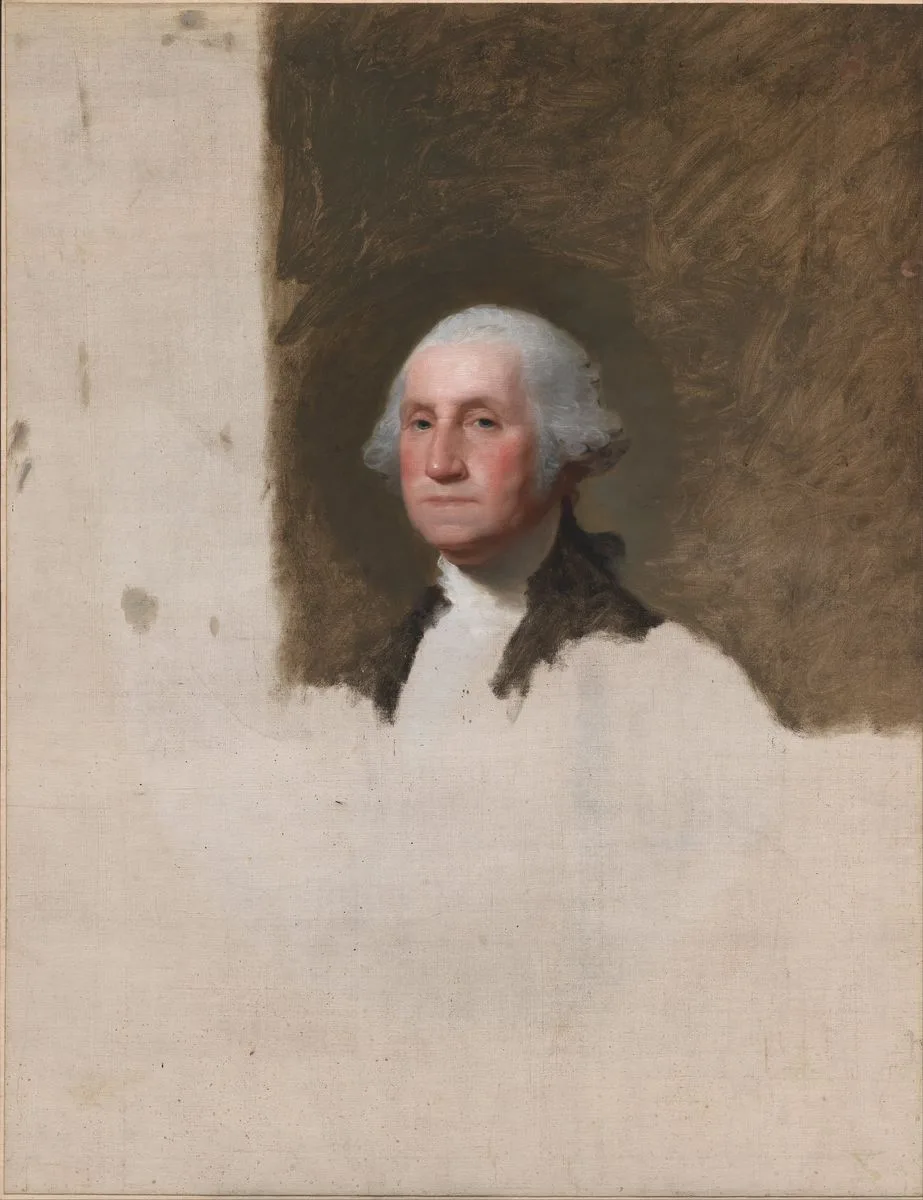
Let's be honest, George Washington does not look thrilled to be here. By the time this life-size portrait was painted in 1796, the president was in his final year in office and, reportedly, breaking in a new, painful set of dentures. That might explain the legendary jaw clench. Despite the subject's apparent discomfort, the painting is packed with deliberate, almost theatrical, symbolism. Washington is presented not as a king, but as a leader of a republic. His hand is outstretched in the pose of a classical orator, not resting on a crown. The sword at his side is a dress sword, a formal accessory, not a weapon of war, symbolizing the transition to a democratic government. The composition is pure "Grand Manner" style, borrowing the pomp of European aristocratic portraits to sell the gravitas of the new American experiment. Note the details meant to project power and legitimacy: books titled "General Orders," "American Revolution," and "Constitution and Laws of the United States" are stacked to remind you of his résumé. The leg of the table is carved to resemble a Roman *fasces*, an ancient symbol of authority. Off to the side, a rainbow breaks through stormy clouds, a not-so-subtle nod to the peace that followed the Revolutionary War. It was a clever way to signal that the turbulent birth of the nation was over. The artist was so successful with his portraits of Washington that he cheekily referred to the copies he sold as his "hundred dollar bills," the price he charged for each one.
How did ArtBot do? Should we ask him to regenerate the information?
The information is correct?