

- Neoclassicism
- Portrait painting
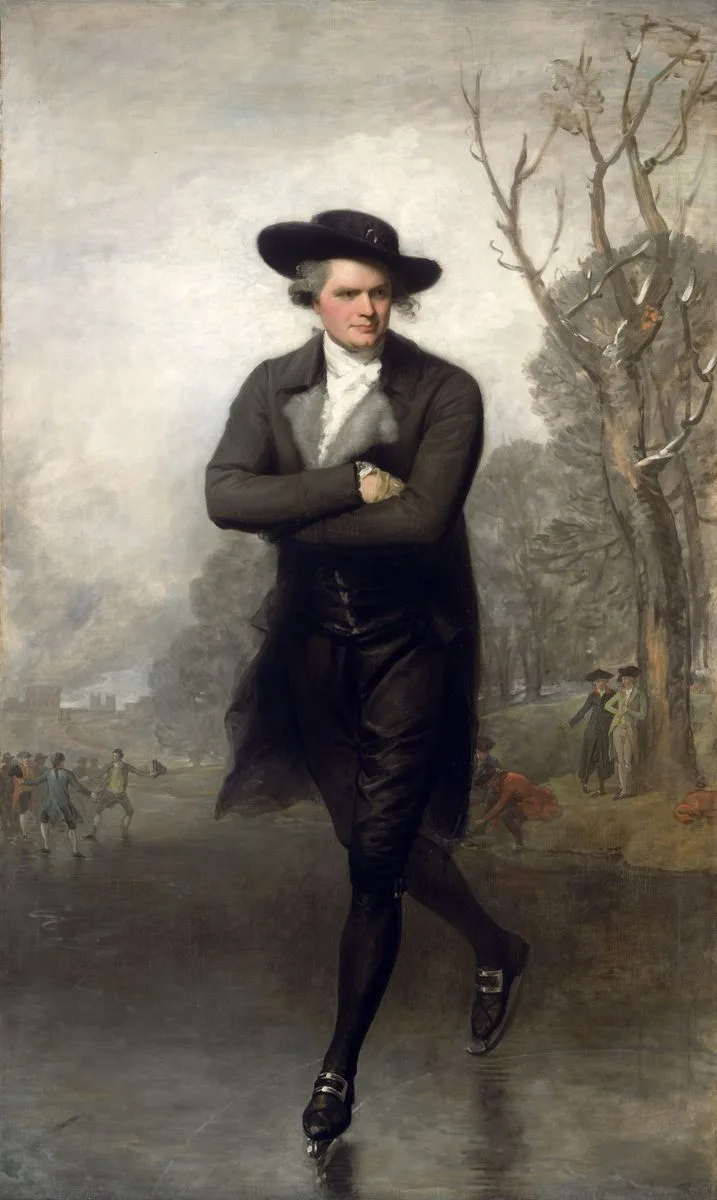
Sure, let's talk about the 1782 equivalent of a viral hit. The story goes that on a bitterly cold day in London, a Scottish lawyer named William Grant showed up for his portrait sitting, took one look at the artist's studio, and declared it was far better weather for skating. The artist, an avid skater himself, apparently agreed, and off they went. What resulted is a portrait that broke all the rules for "Grand Manner" painting, which usually featured people standing still, looking terribly important. Instead, we get Mr. Grant, gliding across a frozen lake with a cool, effortless grace. His pose, with arms crossed, wasn't just for show; it was how 18th-century skaters conveyed their nonchalance. And for a touch of high-brow symbolism, his posture is a direct nod to the famous classical statue, the *Apollo Belvedere*, a cast of which was conveniently located in the artist's mentor's studio. So, he's not just skating; he's skating with classical perfection. Compositionally, the painting is a masterclass in making a limited palette of blacks and greys feel vibrant. Grant’s dark figure cuts across the canvas, dividing a quiet, tree-lined bank from the lively scene of other skaters in the distance. In the background, you can even spot the towers of Westminster Abbey. This depiction of a gentleman in motion was revolutionary. At the Royal Academy exhibition, it was a sensation, utterly unlike the hundreds of static portraits lining the walls. The painting "suddenly lifted [the artist] into fame," proving that sometimes, the best way to get ahead is to go play outside.
How did ArtBot do? Should we ask him to regenerate the information?
The information is correct?