

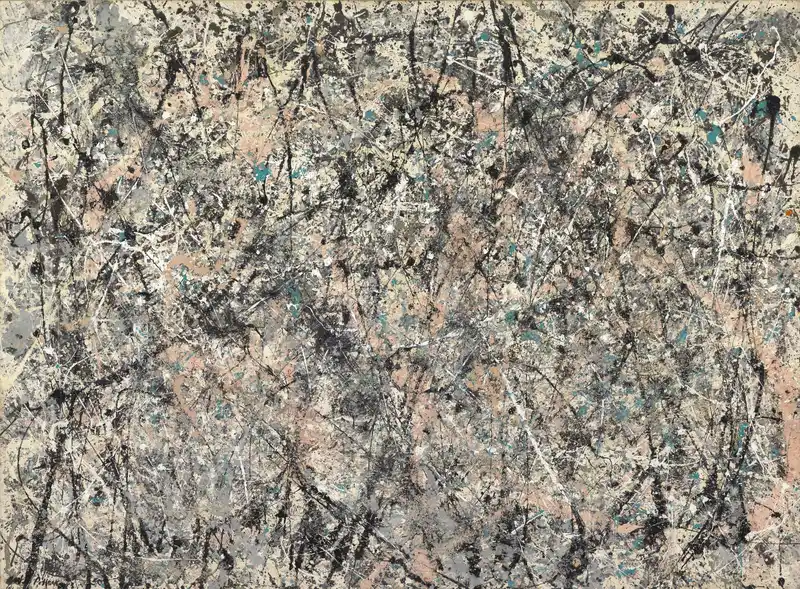
- Abstract expressionism
So, you're looking at a painting that's a bit of a beautiful mess, and that's precisely the point. Let's get one thing straight: despite its dreamy title, there's no actual lavender paint in this web of color. The name "Lavender Mist" was cooked up by an art critic, not the artist, probably because it sounded more poetic than "a whole bunch of paint dripped on a canvas." The composition is what's known as "all-over," which is a fancy way of saying there's no central point to focus on. Your eye is meant to wander through the complex layers of black, white, blue, and russet, a bit like getting lost in a chaotic, yet somehow balanced, galaxy. The artist laid the unprimed canvas on the floor of his barn studio and used sticks and hardened brushes to fling, drip, and pour household enamel paint. It was a radical departure from the polite easel-and-brush tradition. This method wasn't just for show; it was a performance, an "action painting." Think of it as the artist's subconscious made visible, influenced by ideas from Jungian psychology and Native American sand painting. Each drip and splatter is a frozen moment of creation. Historically, this piece landed at a time when the world was grappling with the anxieties of the Cold War. Some saw this new, wild style of art as a symbol of American freedom and individualism, a stark contrast to the rigid artistic doctrines of the time. While critics were initially divided—some seeing genius, others a childish mess—the work helped cement New York's status as the new center of the art world. So, while it may look like random splatters, the artist himself insisted, "No chaos, dammit!"
How did ArtBot do? Should we ask him to regenerate the information?
The information is correct?