

- Italian Renaissance
- High Renaissance
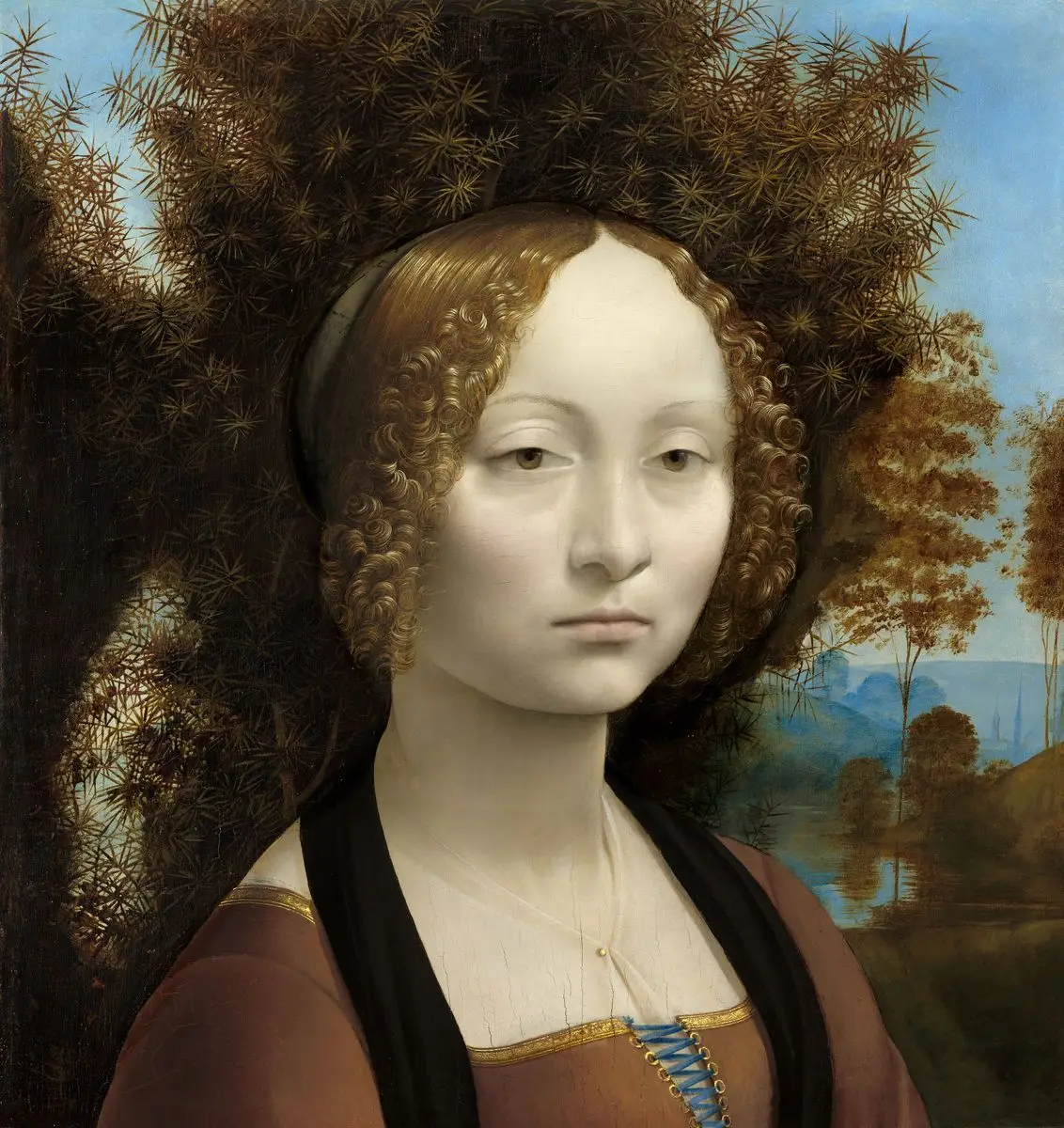
Don't let the reserved expression fool you; Ginevra de' Benci was apparently a woman of noted intellect and a poet, though only a single, cryptic line of her work remains: "I ask your forgiveness and I am a mountain tiger." This portrait, likely painted around the time of her marriage at 16, shows a young woman who seems less than thrilled with the arrangement. In fact, some experts have described her look as a bit grumpy. The painting is loaded with clever symbolism. The large juniper bush behind her isn't just for decoration; "ginepro" is Italian for juniper, a witty little pun on her name. Juniper also symbolized chastity, a virtue highly valued for women during the Renaissance. The back of the painting features a wreath of laurel and palm, representing her intelligence and moral virtue. However, in a juicy twist, these were also the personal emblems of Bernardo Bembo, the Venetian ambassador who had a well-documented platonic affair with Ginevra. Infrared analysis has even revealed that his family motto, "Virtue and Honor," was originally painted on the back before being covered with "Beauty Adorns Virtue." Compositionally, the three-quarter view was a novel approach for Italian portraits of women at the time, which were typically in strict profile. This allowed for a more psychologically engaging depiction. The painting has also been cut down at the bottom, and it's believed that it originally included her hands. Given the artist's skill in rendering hands, it's a pity that part is missing. This portrait broke from tradition by placing Ginevra in a natural landscape rather than a domestic interior, adding to its innovative quality.
How did ArtBot do? Should we ask him to regenerate the information?
The information is correct?