

- Classicism
- Baroque
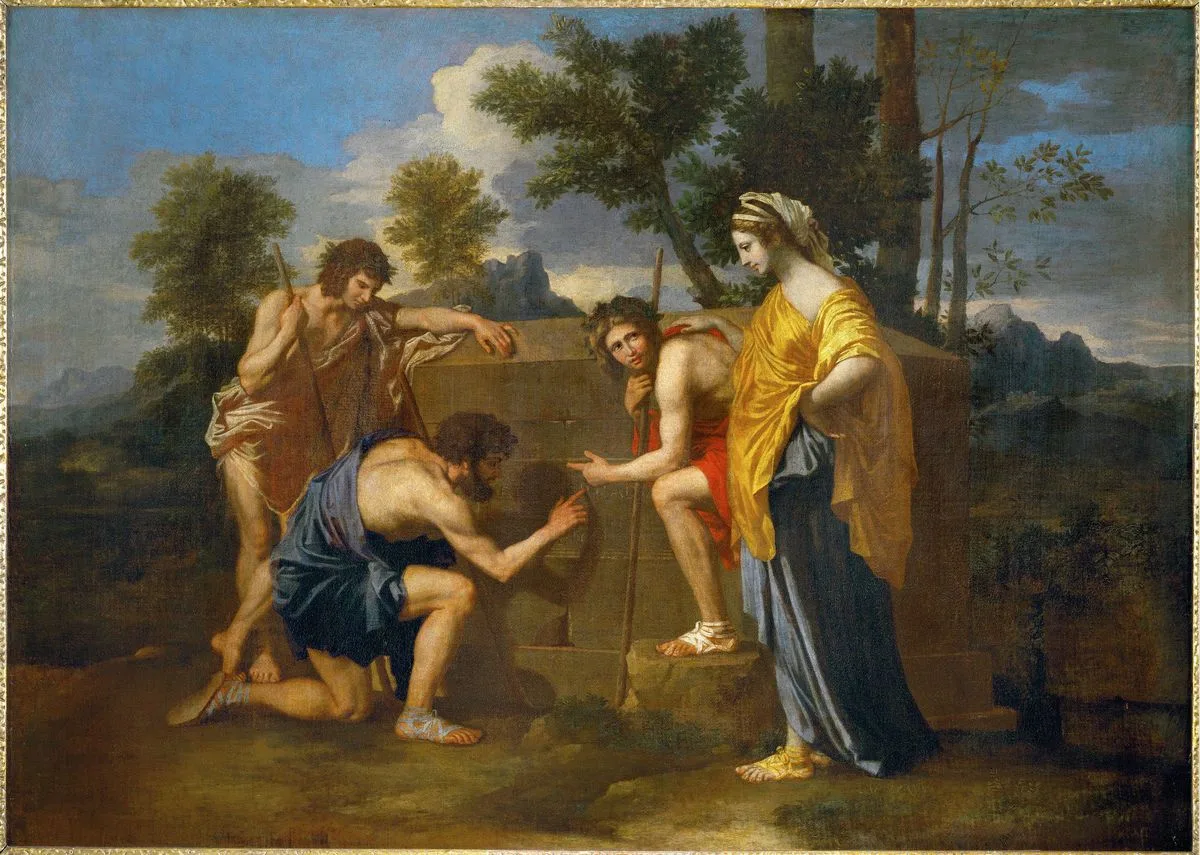
Behold a group of well-dressed shepherds who've stumbled upon a bit of a downer during their day out in paradise. They're in Arcadia, a mythical Greek utopia of unspoiled wilderness, which ancient poets romanticized into the ultimate blissful escape. But surprise! Someone went and planted a stone tomb right in the middle of it. The gang has gathered to puzzle over the inscription, "Et in Arcadia ego," which translates to "Even in Arcadia, I am." The million-dollar question is, who is "I"? The traditional, killjoy interpretation is that Death itself is speaking, a stark reminder that you can't escape the inevitable, even in paradise—a classic *memento mori*. A slightly less grim reading suggests it's the tomb's occupant, nostalgically saying, "I used to hang out in paradise, too." Notice how orderly everyone is about this existential crisis. The figures are arranged in a beautifully balanced, almost geometric composition, their gestures frozen in quiet contemplation. One shepherd traces the letters, his shadow falling ominously on the tomb. There's no panic here, just a serene, philosophical vibe. This painting is a more meditative take on a theme Poussin had tackled before with more drama and an actual skull. Here, the mood is less "we're all going to die!" and more a mellow reflection on a lovely past.
How did ArtBot do? Should we ask him to regenerate the information?
The information is correct?