

- Cubism
- Surrealism
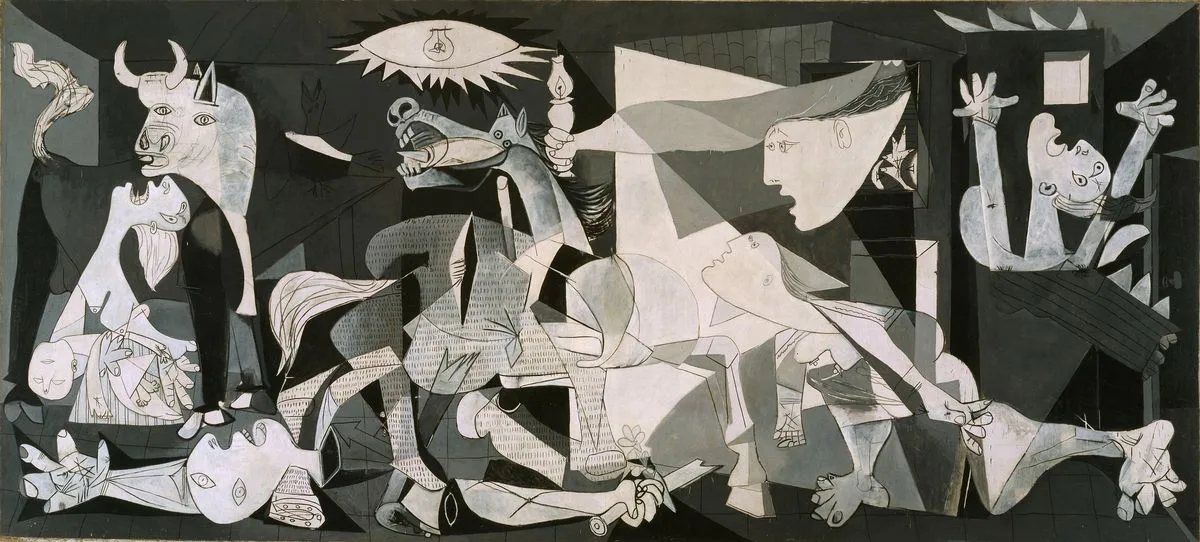
Step right up and gaze upon a masterpiece of organized chaos, a painting that wasn't even supposed to exist. The artist was commissioned to create a mural for the 1937 Paris International Exposition and was doodling away on a completely different subject. Then, Nazi Germany's air force, doing a favor for Spanish Nationalist leader Francisco Franco, bombed the Basque town of Guernica and the news reports gave the artist a new, furious focus. What he whipped up in just over a month is an 11-by-25-foot political statement that is anything but subtle. First, you'll notice the color palette, or lack thereof. The stark black, white, and shades of grey were a deliberate choice, meant to evoke the look of newspaper photography and lend a sense of stark, documentary horror to the scene. The composition is a jumble of screaming figures, a gored horse, a dismembered soldier, and flames. It’s a visual representation of a very bad day, using the fragmented and distorted style of Cubism to convey the sheer panic and violence of the bombing. Now for the symbolism, which everyone loves to argue about. The artist was famously cagey when asked for a simple explanation. The bull, he said, represented "brutality and darkness," while the horse stood for the suffering people. Beyond that, you’re on your own. Is the bull fascism? Is the horse the collapsing Spanish Republic? Scholars have built careers on such questions. The main characters are the suffering women, who convey a universal agony. Perhaps the best summary comes from a legendary encounter. During the Nazi occupation of Paris, a German officer allegedly saw a photograph of the painting and asked the artist, "Did you do that?" The snappy reply: "No, you did."
How did ArtBot do? Should we ask him to regenerate the information?
The information is correct?