

- Post-Impressionism
- Impressionism
- Classicism
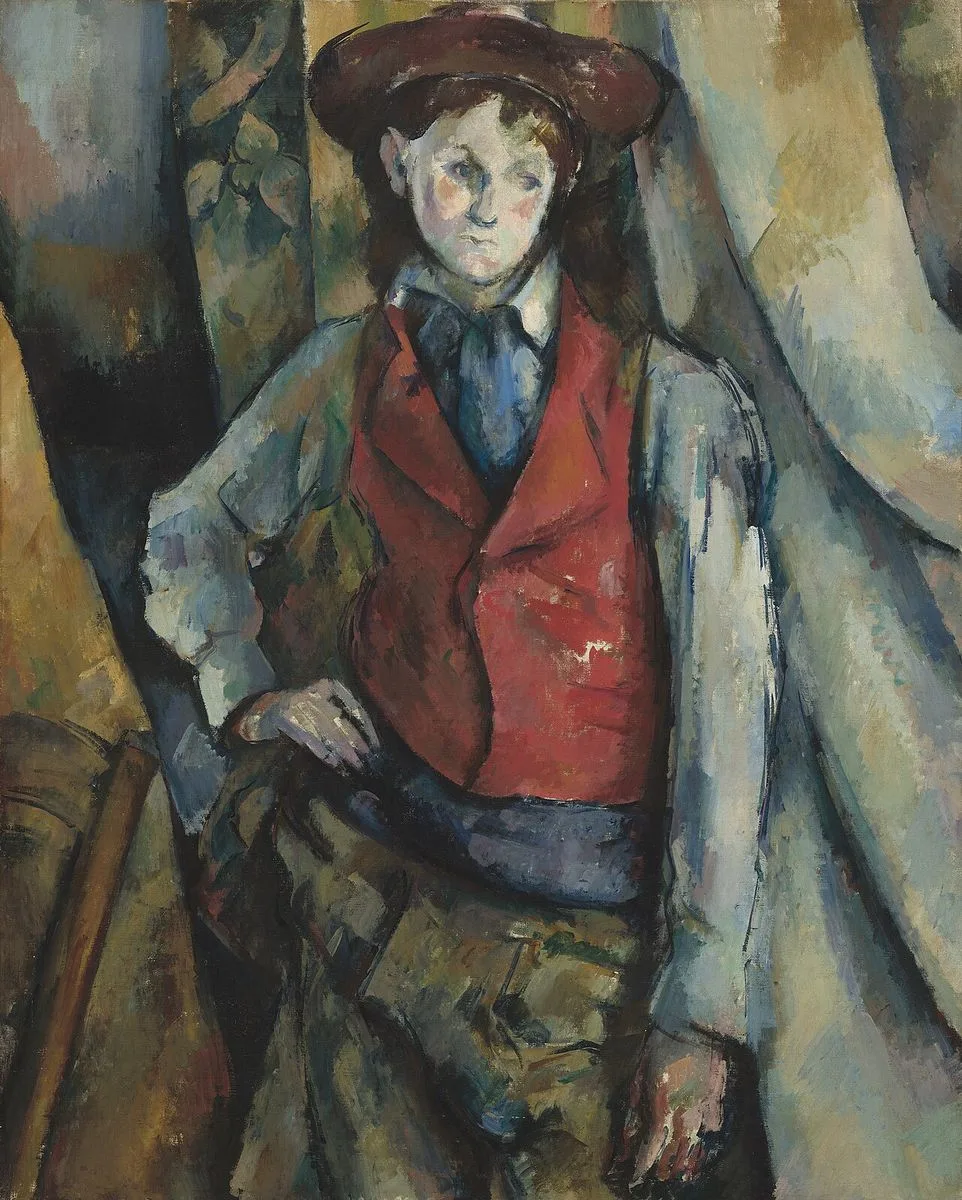
Meet the "Boy in a Red Waistcoat," a young man who seems to be experiencing the universal agony of being a teenager forced to pose for a painting. Created between 1888 and 1890, this is just one of several portraits featuring the Italian model Michelangelo di Rosa, who looks thoroughly unimpressed with the whole affair. His slouch and melancholic gaze practically scream "Are we done yet?" This sense of sad, graceful introspection has been compared to 16th-century aristocratic portraits. Don't let the boy's languid mood fool you; there's a quiet revolution happening on this canvas. Cézanne wasn't just painting a person; he was wrestling with how to put a 3D world onto a flat surface. The composition is a carefully orchestrated dance of diagonals—notice the tilt of the boy's back, his bent arm, and the sweep of the curtain. These lines intersect and echo each other, creating a structured, almost architectural feel. The artist used a limited palette, repeating colors throughout the piece to create harmony. That vibrant red vest is the undeniable star, but it’s balanced by cool blues and muted greens that appear on the boy's skin and clothes, unifying him with his surroundings. It’s this bold dismantling and rebuilding of an ordinary scene that paved the way for Cubism and prompted Picasso to call Cézanne "the father of us all." So, while the boy in the vest looks bored, the painting itself is anything but. The work even had a dramatic adventure of its own when it was stolen in a major art heist in 2008 and recovered in Serbia four years later.
How did ArtBot do? Should we ask him to regenerate the information?
The information is correct?