

- High Renaissance
- Italian Renaissance
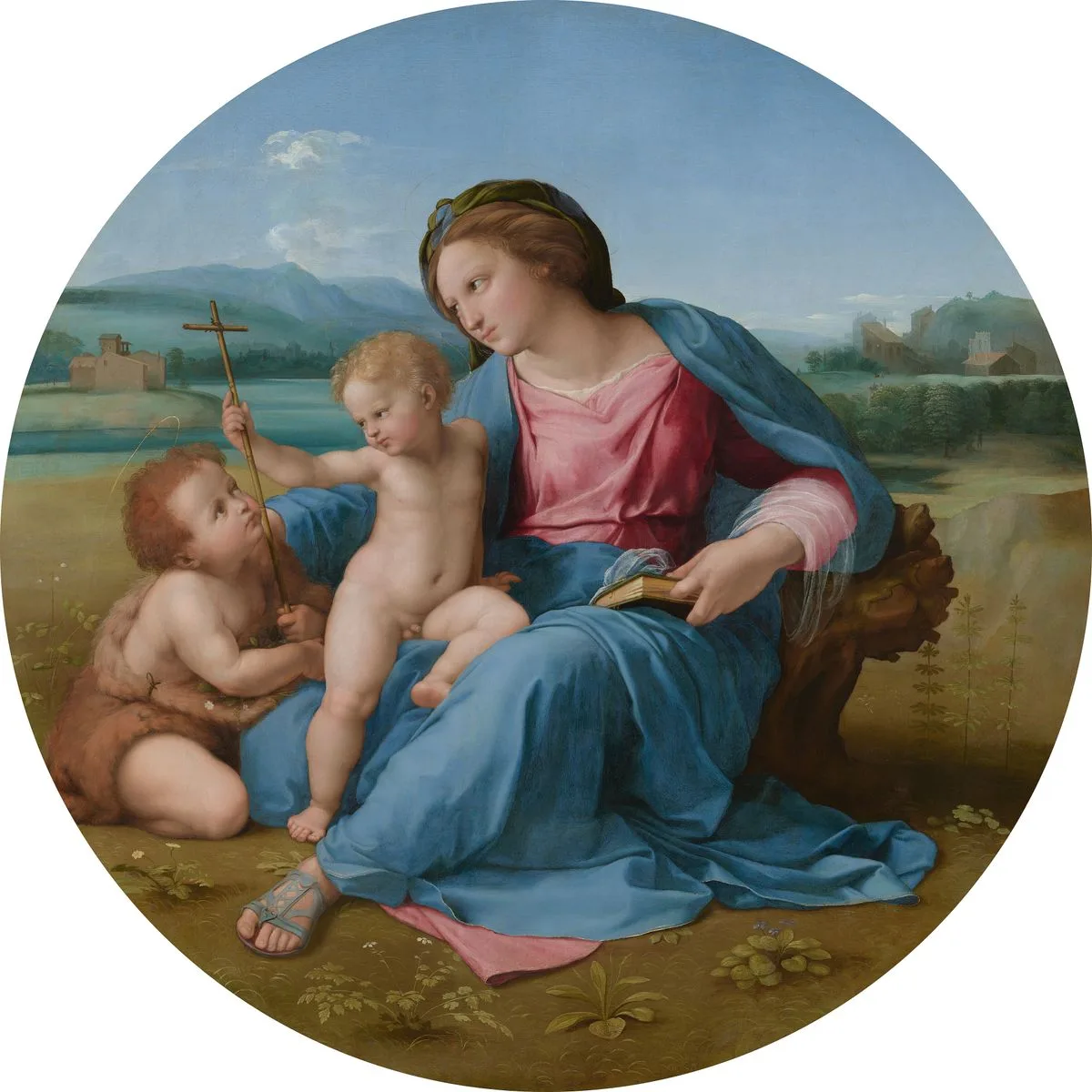
At first glance, you might see a lovely picnic—Mary, baby Jesus, and his cousin, John the Baptist, enjoying a sunny day in the Italian countryside. But don't let the serene landscape fool you; there's some serious foreshadowing going on here. Little John is handing Jesus a reed cross, and Jesus, with a rather solemn look for a baby, is grabbing it. This isn't just child's play; it’s a symbolic acceptance of his future crucifixion. So much for a carefree toddlerhood. The painting is a *tondo*, a fancy Italian word for a round picture, a format popular in Florence. The figures are artfully arranged in a sort of lopsided pyramid, with Mary's outstretched arm and billowing cloak balancing the whole scene. This circular frame isn't just for decoration; it pulls the figures into a graceful, rhythmic embrace that makes the whole composition feel both stable and alive. Even the halos are barely there, a subtle move away from overly obvious religious symbols. To add another layer to this divine drama, the foreground is basically a symbolic nursery. You'll find flowers like cyclamen for love and sorrow, violets for humility, and even dandelions, which apparently symbolize the Passion of Jesus. Historically, the painting gets its name not from its subject, but from a former owner, the Spanish House of Alba, who held onto it for a good while. It was originally an oil painting on a wood panel, but at some point, it was transferred to canvas—a high-stakes art conservation procedure that speaks to its long and well-traveled life.
How did ArtBot do? Should we ask him to regenerate the information?
The information is correct?