

- Baroque
- Dutch Golden Age
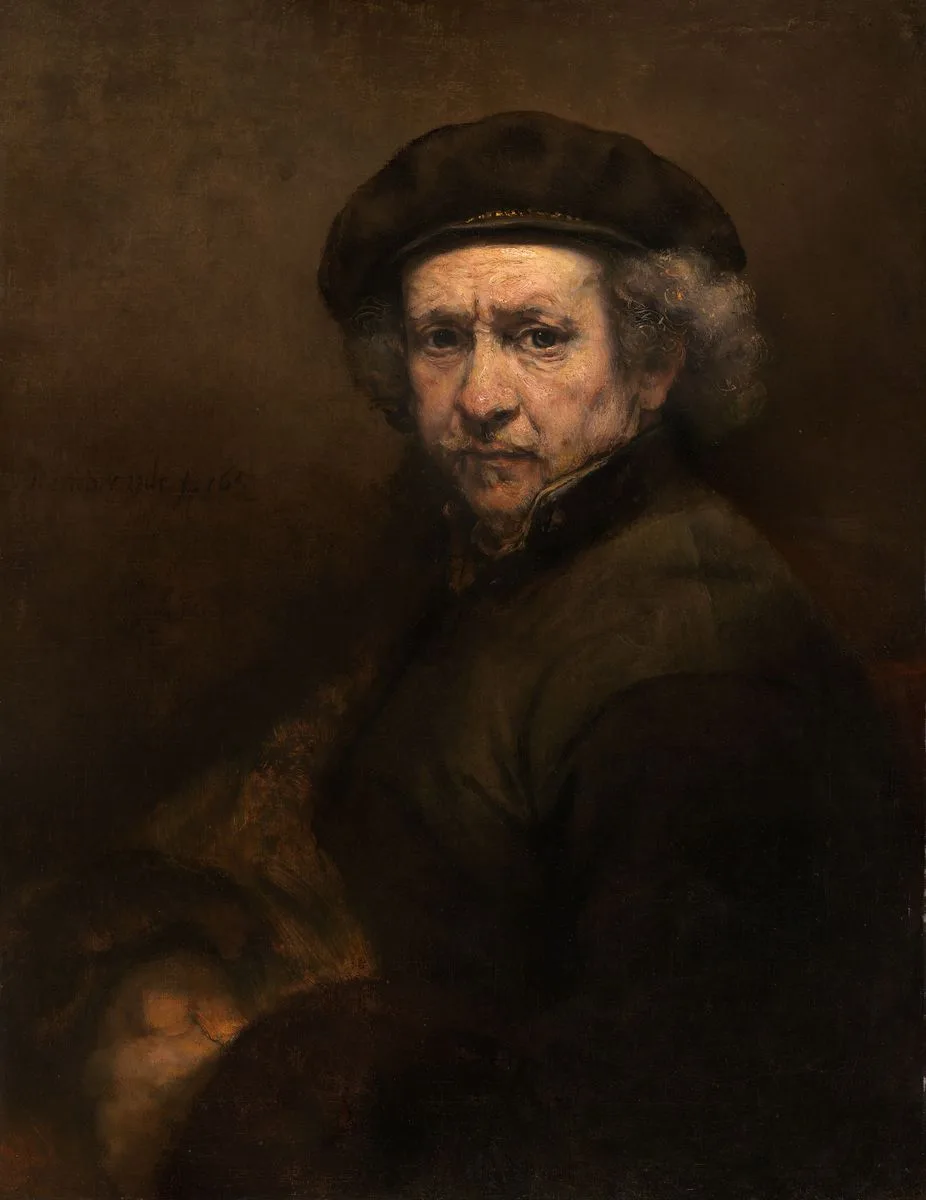
Well, look what we have here. If you've ever wondered what a 17th-century artist looked like after life had thrown a few punches, this self-portrait from 1659 is a pretty good place to start. Forget the swaggering, costume-party vibes of his younger self-portraits; this is the face of a man who had recently been declared bankrupt and had to watch all his stuff get sold off. You can almost hear him thinking, "Well, that escalated quickly." The composition is deceptively simple. He's ditched the fancy props and is giving us a direct, almost uncomfortably honest gaze. The dramatic lighting, a classic move known as chiaroscuro, puts his face in the spotlight, leaving the rest to the shadows. It's a brilliant way to say, "Pay attention to this weary-but-wise face," which is modeled with thick, textured paint suggesting both age and the emotional toll of his experiences. That high collar isn't just a fashion statement; it handily hides his jowls. There's a bit of a power play in the pose, which seems to echo famous portraits by Italian Renaissance masters like Raphael and Titian. It’s as if he’s subtly reminding everyone that even when he’s down, he’s still in the same league as the greats. The beret, a classic artist's accessory, sits on his head like a symbol of his enduring identity. Ultimately, the painting is a masterclass in self-reflection, a pitilessly honest look in the mirror that captures the "stresses and strains of a life compounded of creative triumphs and personal and financial reverses".
How did ArtBot do? Should we ask him to regenerate the information?
The information is correct?