

- Baroque
- Dutch Golden Age
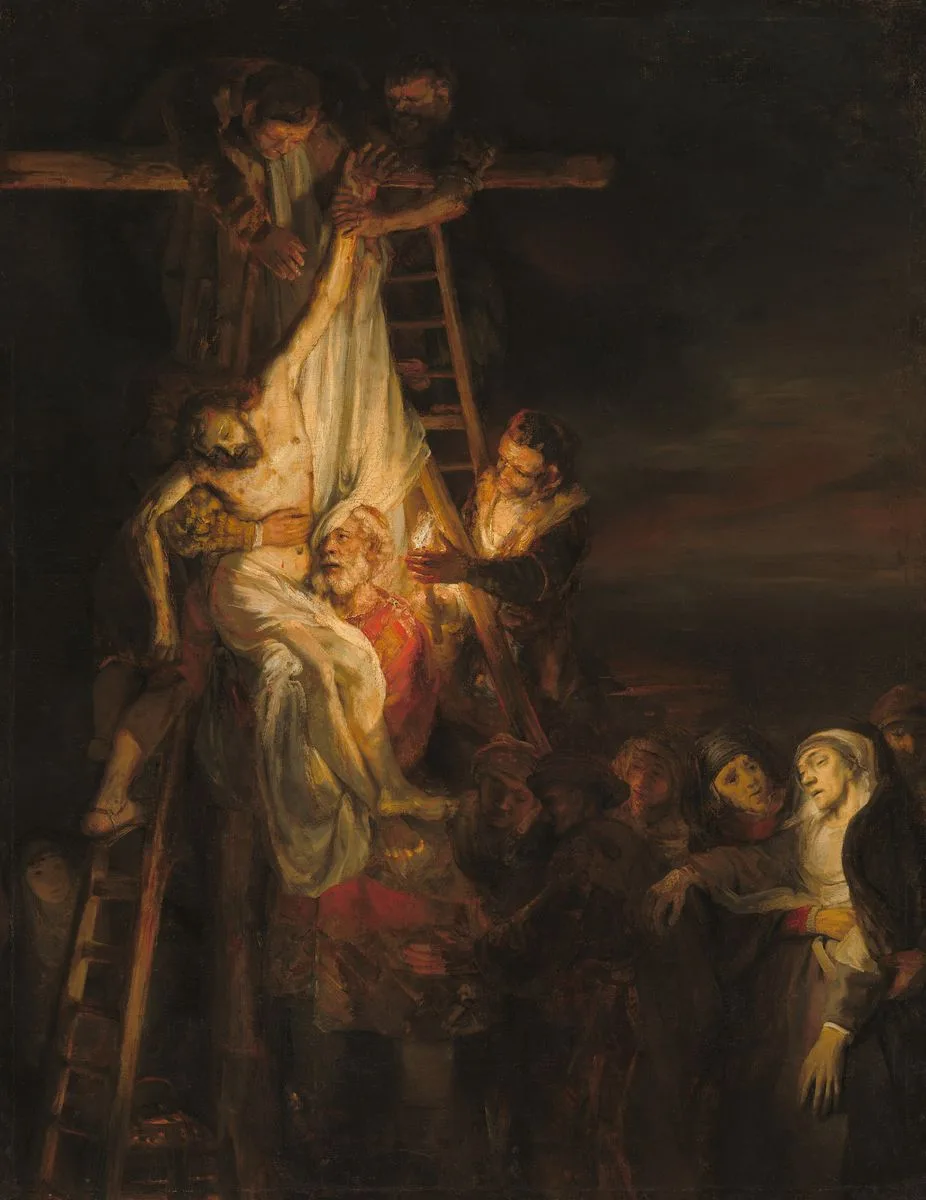
Let's be honest, getting a body down from a cross is awkward work, and this painting doesn't shy away from the messy reality. Forget beatific, serene depictions; this is a raw, emotionally charged moment. The star of the show, compositionally speaking, is the dramatic lighting. A single, powerful light source cuts through the oppressive darkness, spotlighting the pale, lifeless body of Christ. It’s a masterclass in creating a focal point, ensuring you don't miss the main, rather grim, event. The figures surrounding the cross aren't just posing; they are visibly struggling with the dead weight of a human body, their faces a study in grief and exertion. One woman has fainted entirely from the overwhelming sorrow. This isn't a sanitized, heroic scene; it's a depiction of profound, human suffering, with a decided lack of idealization. The body itself is unsettlingly realistic, twisted and slumped in a way that truly conveys the finality of death. Interestingly, this work was part of a series commissioned by a VIP patron, the secretary to the Prince of Orange. It's also seen as a direct response to a similar, more famous version by Peter Paul Rubens. In what might be the ultimate power move, some scholars believe one of the men on the ladder, struggling to lower the body, is a self-portrait. Talk about inserting yourself into the narrative.
How did ArtBot do? Should we ask him to regenerate the information?
The information is correct?