

- Neoclassicism
- Romanticism
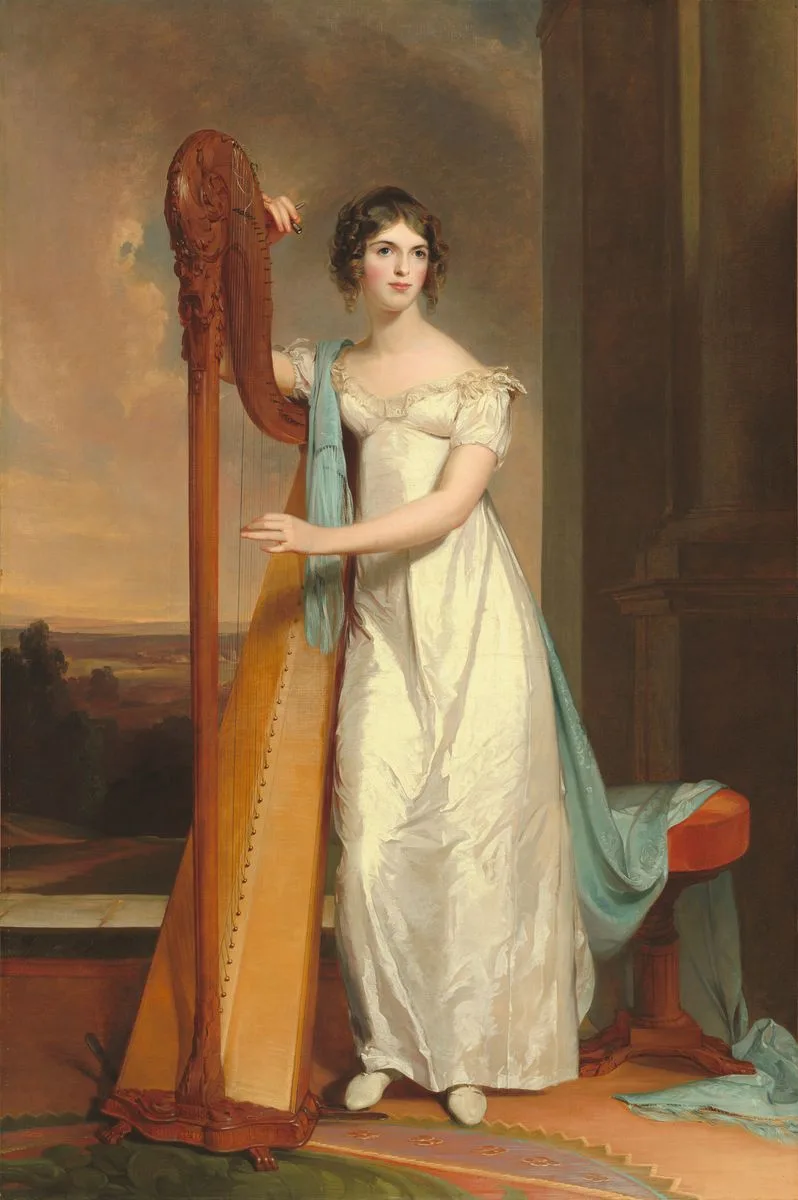
Meet Eliza Ridgely, the fifteen-year-old subject of this rather grand portrait, who, thanks to the artist, appears poised well beyond her years. Commissioned by her doting father, a wealthy merchant, the painting was essentially a debutante portrait, a way to introduce the accomplished and eligible Miss Ridgely to potential suitors. And what better way to showcase her refinement than with a harp? In the 19th century, this instrument was a clear symbol of a cultured young lady, signifying both social status and artistic talent. The harp itself was a pricey import from France, a testament to the family's wealth. And yes, Eliza really did play—receipts for her music lessons and harp repairs have survived. Notice the elegant, if not entirely realistic, composition. The artist, Thomas Sully, was known for "improving" on his subjects' appearances. Eliza's elongated limbs and the romantic, sunset-drenched landscape in the background all contribute to an idealized, dreamy atmosphere. She is presented not just as a person, but as the epitome of grace and sophistication. Her fashionable Grecian-style gown further enhances this image. This wasn't just a portrait; it was a statement about taste, wealth, and the ideal of American womanhood at the time.
How did ArtBot do? Should we ask him to regenerate the information?
The information is correct?