

- High Renaissance
- Venetian School
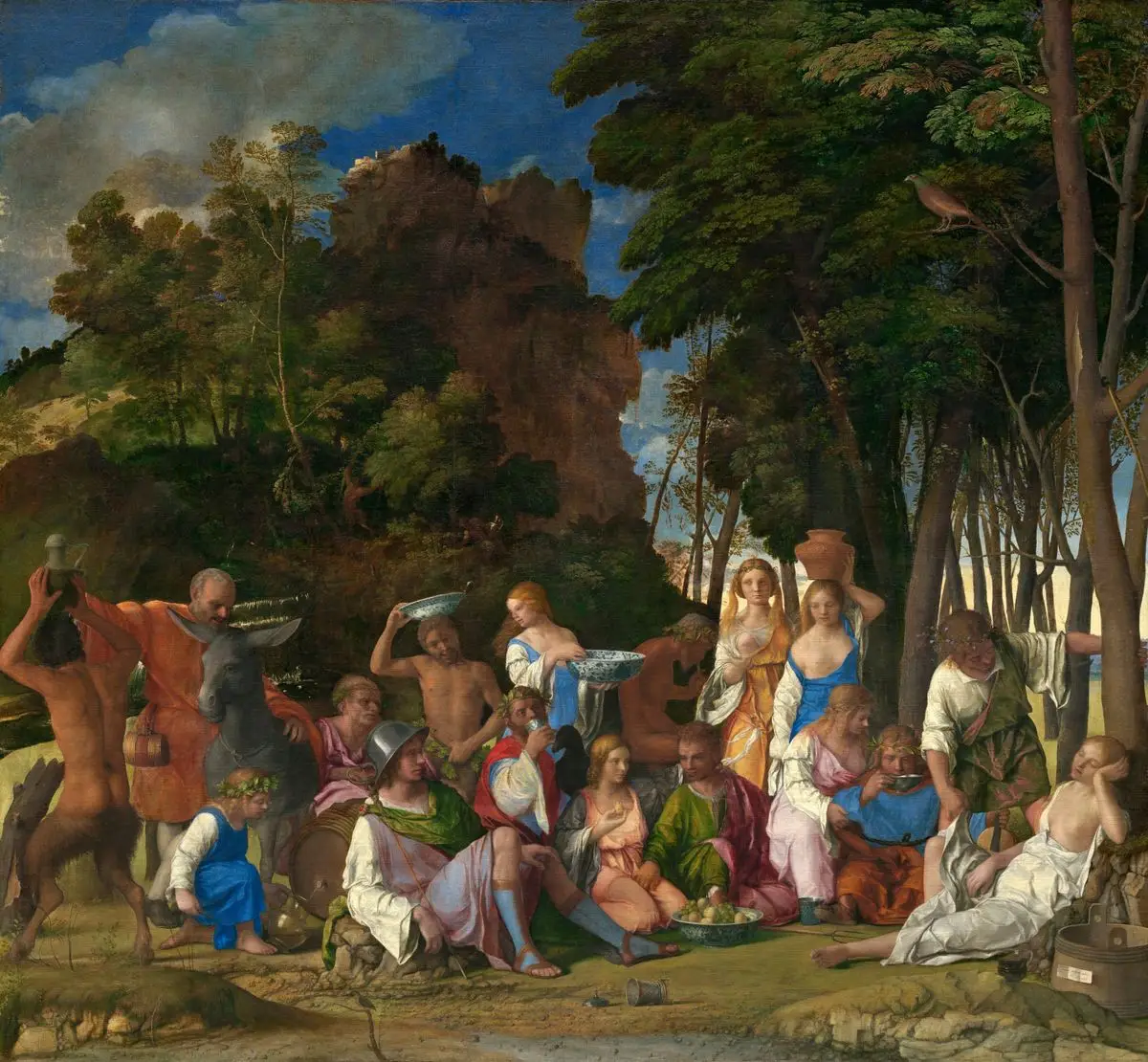
At first glance, you’re looking at a rather sedate picnic, albeit one with an oddly formal dress code of robes and partial nudity. But this divine get-together is actually the preamble to a very awkward moment. The story, lifted from the Roman poet Ovid, depicts a gaggle of gods enjoying a woodland party. The main drama, however, is brewing on the fringes. Look to the far right, where the god of fertility, Priapus, is about to take advantage of the sleeping nymph Lotis. His plan is about to be spectacularly foiled by the braying of an ill-timed donkey, seen on the left. This rude awakening will startle the nymph, expose Priapus, and leave him the laughingstock of the entire pantheon. The composition cleverly parks all the main action on the edges, while the A-listers of Roman mythology—like Jupiter and Neptune—lounge in the center, seemingly oblivious. You can spot Bacchus as a child, decanting wine, which is responsible for the sleepy, disheveled state of many attendees. Historically, this painting had more than one cook in the kitchen. Commissioned by Duke Alfonso d'Este for his private study, the original artist completed the work in 1514. However, the Duke later had other artists come in and paint over the background landscape, not once, but twice, to better match other works in his collection. It’s a classic case of a powerful client making sure the final product fit his very specific decor goals.
How did ArtBot do? Should we ask him to regenerate the information?
The information is correct?