

- Sumerian
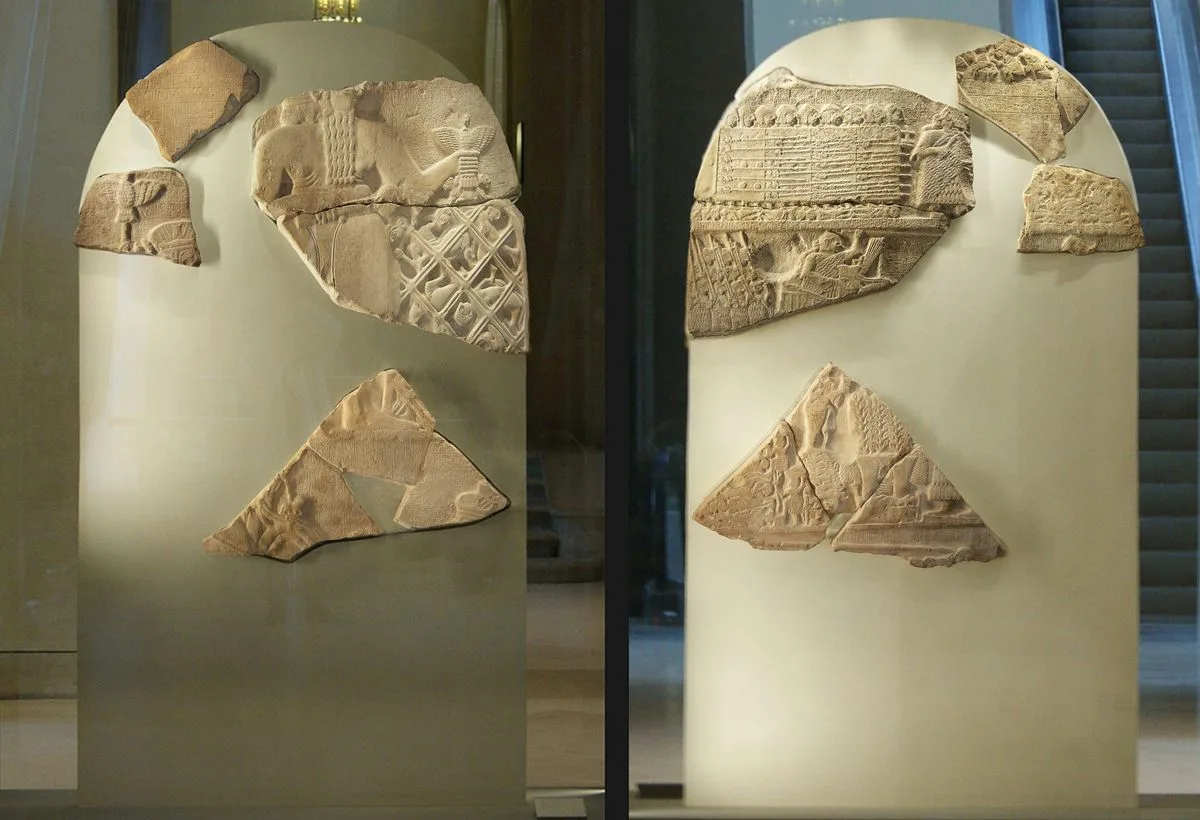
So, you think victory monuments are a modern invention? The Sumerians would like a word. Meet the Stele of the Vultures, a nearly 4,500-year-old limestone slab that’s basically a billboard for a brutal beatdown. Erected by King Eannatum of Lagash, this piece is all about gloating over his win against the rival city-state of Umma. It’s one of the earliest known war monuments, which proves that bragging is a truly ancient art form. Forget subtlety; this stele gets straight to the point. One side, the "historical" face, is carved in registers, kind of like a comic book of carnage. In the top panel, vultures fly off with the severed heads of Umma's soldiers—hence the cheerful name. Below that, you’ve got the king leading his tightly packed army, marching right over the bodies of the defeated. It’s the earliest known depiction of a phalanx formation, so they were innovators in organized violence. The other side is the "mythological" take, where the god Ningirsu does the heavy lifting. He’s shown as a massive figure holding the enemies of Lagash in a giant net, ready to smash them with his mace. This divine endorsement was the ultimate "I told you so," suggesting that Eannatum's victory wasn't just good strategy; it was the will of the gods. The whole composition is a masterclass in propaganda, a not-so-gentle reminder to Lagash's neighbors to think twice before picking a fight over farmland.
How did ArtBot do? Should we ask him to regenerate the information?
The information is correct?