

- Ancient Egyptian art
- New Kingdom art
- Relief
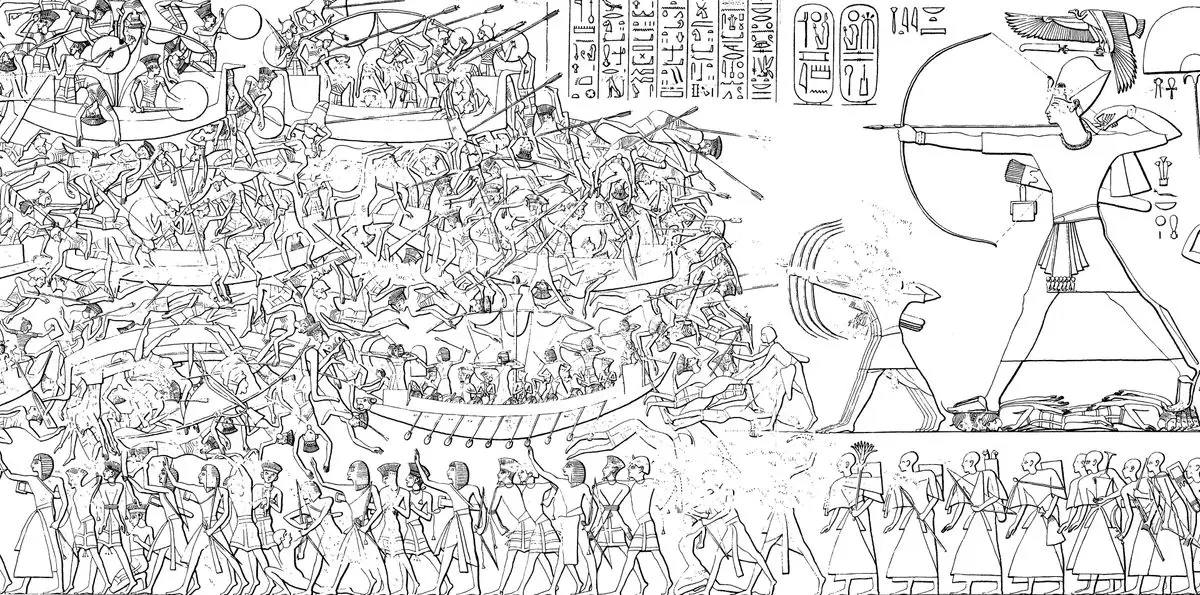
Let's be honest, "The Battle of the Delta" is less of a single masterpiece and more of a victory lap in stone, courtesy of Pharaoh Ramesses III. Carved into the walls of his mortuary temple at Medinet Habu around 1175 BC, this series of reliefs is ancient Egypt's version of a blockbuster action movie, and the pharaoh is the undisputed star. The whole chaotic scene is a carefully crafted piece of propaganda. The jumble of enemy ships and drowning soldiers is an intentional artistic choice to represent the triumph of Egyptian order over foreign chaos. Symbolically, this was about maintaining *ma'at*—the cosmic balance—and Ramesses, of course, is the hero who restores it. In a surprising twist, however, the so-called "Sea Peoples" aren't depicted as a disorganized rabble. Some are shown in disciplined military formations, an unusual sign of respect for the enemy in Egyptian art, suggesting these invaders were a genuine threat. Compositionally, this is all about the pharaoh. He's the main character, and everyone else is just a supporting actor in his grand narrative of victory. The reliefs even include the invaders' families in ox-carts, which art historians believe was a clever way to visually link them to other established, civilized enemies from Syria and Anatolia, thereby big-upping the pharaoh's achievement. Historically, this wasn't just an artistic flex. The "Sea Peoples" were a very real confederation of maritime marauders who were toppling empires across the Mediterranean during the Late Bronze Age collapse. Ramesses III's decisive victory, a cunning ambush in the Nile Delta, was a crucial, if costly, win that kept Egypt from crumbling like its neighbors. So, while the artists are unknown, their boss's message is crystal clear: don't mess with the pharaoh.
How did ArtBot do? Should we ask him to regenerate the information?
The information is correct?