

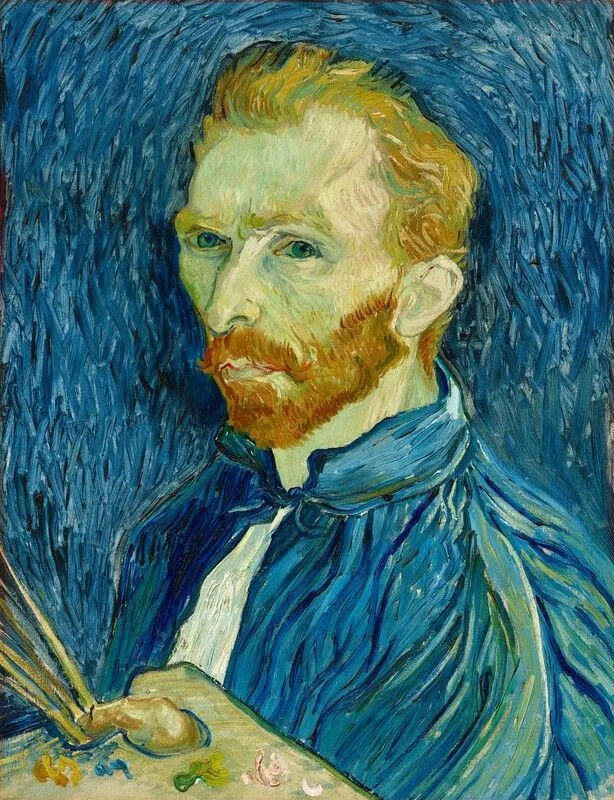
- Post-Impressionism
- Expressionism
So, you’re looking at this self-portrait and thinking, "This guy seems a bit intense." You're not wrong. Painted in 1889, this is one of over 30 self-portraits the artist made, which suggests he either really liked his own face or, more practically, couldn't always afford to hire models. This particular one was created while he was a voluntary patient at an asylum in Saint-Rémy-de-Provence. Notice the background? That's not your grandma's floral wallpaper. The swirling, agitated blues and greens are a signature move, echoing the chaos and creative energy of his inner world. Some observers see the turbulent patterns as a sign of the immense strain he was under. Yet, there's a fascinating control in the rhythmic brushstrokes, suggesting a steady, deliberate hand amidst the turmoil. The artist presents himself in a smart blue suit, not the working clothes you might expect. His face, with its greenish hue and coppery beard, clashes with the cool background, pulling your focus right to his sharp, weary gaze. In letters, he mentioned that he felt his expression was calmer in this piece, though his eyes retained an "insecure look." Interestingly, while this was painted after the infamous ear incident, he chose to show the uninjured side of his face. It’s a deliberate choice, suggesting a desire to be seen as a resilient artist rather than just a victim of his struggles. He’s using the canvas to reconstruct his own identity after a period of severe illness. He’s not just painting a picture; he’s trying to figure himself out, and he’s letting us watch.
How did ArtBot do? Should we ask him to regenerate the information?
The information is correct?